

Staying hydrated is essential for your oral health. Water helps maintain saliva production, which protects your teeth, gums, and overall mouth health. Here’s why proper hydration matters:
- Prevents cavities and tooth decay: Water rinses away food particles, sugars, and acids, reducing plaque buildup.
- Combats dry mouth: Dehydration lowers saliva production, leading to bacterial growth and weakened enamel.
- Protects gums: Hydrated gums resist inflammation and gum disease.
- Keeps breath fresh: Saliva neutralises odour-causing bacteria, and water washes away debris.
- Strengthens teeth with fluoride: Drinking fluoridated water repairs enamel and reduces cavities.
For a healthier mouth, drink 2–3.7 litres of water daily, include water-rich foods in your diet, and limit caffeine and sugary drinks. If you experience persistent dry mouth or dental issues, consult a dentist for personalised care.
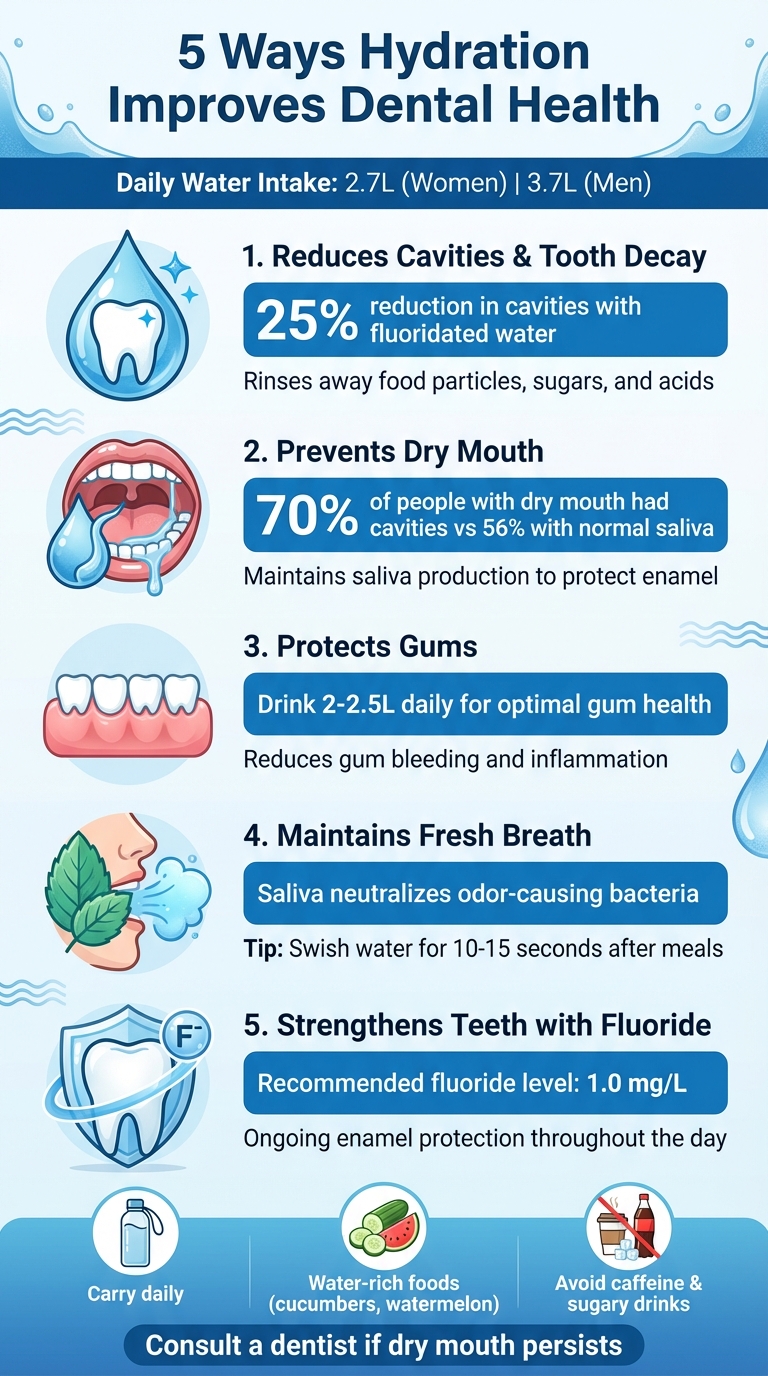
5 Ways Hydration Improves Dental Health Infographic
Drinking Water for Good Oral Health
How Hydration Supports Oral Health
Hydration plays a key role in supporting your oral health, especially through its impact on saliva production.
Drinking enough water – about 2.7 litres per day for women and 3.7 litres per day for men – is essential for maintaining a healthy mouth. Proper hydration helps your mouth produce enough saliva, which is crucial for defending against tooth decay and gum disease. Saliva acts as a natural shield, neutralising acids from plaque and food, and maintaining a balanced pH that discourages the growth of harmful bacteria.
"Saliva is your body’s naturally produced defence against tooth decay. It works by helping to neutralize dangerous acids that can occur after eating or drinking." – Dr. Annie Thomas, Dentist, Bristol Dental
Water also helps in another way – it rinses away leftover food particles and debris, keeping your mouth clean. At the same time, saliva delivers important minerals like calcium, phosphate, and fluoride to your teeth. These minerals strengthen enamel through a process called remineralisation, helping to protect your teeth from decay. By preventing plaque from hardening into tartar, hydration also reduces the risk of gum irritation and inflammation.
Saliva’s antibacterial properties are another benefit. It contains enzymes that break down harmful bacteria, which are then swallowed and neutralised by stomach acid. Staying hydrated keeps this protective cycle running smoothly, contributing to healthier teeth and gums overall.
1. Water Reduces Cavities and Tooth Decay
Water works as nature’s own mouthwash, helping to rinse away leftover food particles, sugars, and acids right after you eat. This simple action removes the key ingredients that plaque bacteria rely on to produce harmful acids, which are the main culprits behind cavities. It also stops fresh plaque from hardening into tartar, a more stubborn form of buildup .
"Water cleans your mouth with every sip. It washes away leftover food and residue that cavity-causing bacteria are looking for." – American Dental Association
Drinking water after meals can also dilute acids and help stabilise your mouth’s pH, which protects your enamel from erosion . The benefits multiply if you’re drinking fluoridated tap water. Communities with access to fluoridated water see about a 25% reduction in cavities among both children and adults. Fluoride plays a key role by strengthening enamel through remineralisation, restoring minerals to areas that have been weakened by acid attacks.
Incorporating this into your routine is simple. If brushing your teeth isn’t an option right after eating, take a moment to swish water around in your mouth for 10 to 15 seconds. This quick habit can clear out much of the debris that leads to cavities and help maintain a balanced pH. And when enjoying drinks like coffee, tea, or wine, sip water alongside them to rinse away acids and staining agents before they settle on your teeth.
2. Hydration Prevents Dry Mouth and Protects Enamel
Even mild dehydration can significantly lower saliva production, leading to dry mouth (xerostomia). This condition creates the perfect environment for bacteria to thrive, increases acid levels, and weakens enamel by limiting the supply of essential minerals like calcium, phosphate, and fluoride. Studies highlight the stark contrast in cavity rates between individuals with adequate saliva flow and those without.
"Saliva plays an important role in keeping your mouth healthy by washing away food debris and bacteria from your teeth and gums and neutralising bacterial acids." – American Dental Association
Research shows that 70% of people with dry mouth had at least one cavity, compared to 56% of those with normal saliva flow. On average, individuals suffering from chronic dry mouth had 4.0 decayed tooth surfaces.
To combat dry mouth, staying hydrated is key. Start by drinking a glass of water as soon as you wake up and another before going to bed, as saliva production naturally decreases overnight. If you’re on medications like antihistamines or antidepressants that may reduce saliva flow, speak with your doctor about possible solutions. Chewing sugar-free gum, especially those containing xylitol, is another effective way to stimulate saliva and keep your mouth moist.
3. Hydrated Gums Resist Gum Disease
Staying hydrated isn’t just great for your overall health – it’s also a game-changer for your gums. Just like teeth, gum tissues depend on adequate hydration to stay healthy. When properly hydrated, gums maintain their elasticity and structure, forming a strong defence against harmful bacteria. On the flip side, dehydration can lead to gum recession, which exposes the roots of your teeth to decay and infection.
Water plays a key role here. Saliva, which is largely water, carries essential minerals, oxygen, and nutrients that help repair and strengthen gum tissue. This means staying hydrated not only supports your enamel but also directly benefits your gums.
"Staying hydrated is one of the most powerful and natural ways to maintain healthy gums." – Dr. Richard Brown Jr., Dentist, Dentistry For You
Research backs this up. A study published in the Journal of Clinical Periodontology revealed that drinking more water is linked to less gum bleeding and shallower pocket depths – both signs of healthy gums. Water also helps wash away food particles and bacteria that can irritate your gums and lead to inflammation.
To keep your gums in top shape, aim to drink 2–2.5 litres (8–10 cups) of water daily. If brushing isn’t an option after meals, swish water in your mouth for 10–15 seconds to help remove debris. Adding water-rich foods like cucumbers, celery, oranges, and watermelon to your diet can also boost saliva production. Watch out for signs of oral dehydration, such as a dry or sticky mouth, bad breath, or gums that look red, swollen, or bleed when brushing. These could mean you need to up your water intake.
sbb-itb-25377e1
4. Hydration Helps Maintain Fresh Breath
Beyond its role in protecting enamel and gums, staying properly hydrated also plays a key part in keeping your breath fresh.
Dehydration can lead to reduced saliva production, which creates the perfect conditions for odour-causing bacteria to thrive. Saliva is your mouth’s natural defence mechanism – it not only washes away food particles and sugars but also helps control the bacteria responsible for producing unpleasant smells. It contains antibacterial agents and enzymes that break down bacteria, trapping them in the fluid, which is then swallowed and neutralised by stomach acid.
"A dry mouth is a paradise for the bacteria that will lead to bad breath. Enough water ensures to keep our mouths hydrated and thus reduces the case of dry mouth." – Clove Dental Team
When you’re dehydrated, your mouth becomes dry, allowing acids from bacteria and food to build up, further contributing to bad breath. Drinking water not only helps neutralise these acids but also keeps your mouth moist, reducing the chances of odour.
Incorporating simple hydration habits can make a big difference. Start your day with a glass of water to combat morning breath. After meals, swish water in your mouth for 10–15 seconds to remove food debris, especially when brushing isn’t an option. Be mindful of early dehydration symptoms like a sticky tongue, cracked lips, or darker urine. Additionally, cut back on coffee, alcohol, and sugary carbonated drinks, as these can dehydrate you and worsen dry mouth.
Unlike other beverages, water has a neutral pH and doesn’t contain sugars or acids, making it the ideal choice for rinsing your mouth without encouraging bacterial growth. If bad breath continues despite staying hydrated, it’s worth consulting your dentist, as it could signal chronic dry mouth or another underlying issue.
5. Fluoridated Drinking Water Strengthens Teeth
Drinking fluoridated water does more than just quench your thirst – it helps protect your teeth by strengthening enamel, the hard outer layer that shields against decay. Fluoride, a naturally occurring mineral, plays a key role in this process.
"Fluoride works by strengthening the tooth’s hard outer surface, called enamel and helps reverse early decay by replenishing lost minerals." – National Institute of Dental and Craniofacial Research (NIDCR)
The way fluoridated water works is quite unique compared to fluoride toothpaste. While toothpaste only stays on your teeth for a short time during brushing, fluoridated water provides ongoing protection throughout the day. Every sip you take introduces fluoride to your mouth, where it mixes with saliva and helps repair weakened enamel. Fluoride attracts minerals like calcium, aiding in the repair of areas where acid-producing bacteria have caused damage. Studies reveal that community water fluoridation can reduce cavities in both children and adults by 25%.
In India, the importance of fluoride is recognised in regulatory guidelines. The National Programme for Prevention and Control of Fluorosis (NPPCF) recommends a fluoride level of 1.0 mg/litre in drinking water. This is particularly crucial since 60–90% of school children and 85–90% of adults in India suffer from dental cavities. To ensure you’re getting the right amount, check with your local water utility about fluoride levels or read the labels on bottled water, as some brands may not meet this standard.
However, balance is key. Consuming too much fluoride can result in dental fluorosis, a condition that causes white spots on teeth. If you live in an area where fluoride levels are naturally high, it’s a good idea to consult a dentist, such as those at The Dental Lounge (https://thedentalloungeindia.com), to manage your fluoride intake from water, toothpaste, and other treatments.
Practical Hydration Tips for Better Oral Health in India
Hydration plays a key role in maintaining saliva production, which is vital for oral health. In India, where the climate tends to be hot and humid, staying hydrated can be particularly challenging. Dehydration can lower saliva flow, weakening your mouth’s natural defence against tooth decay and gum disease. Here are some easy-to-follow tips to help you stay hydrated and protect your oral health.
Carry a reusable water bottle wherever you go. This simple habit ensures you sip water throughout the day instead of gulping it down in large quantities at once.
"Sipping water in regular intervals can save you from tooth pain, bleeding gums and halitosis", says Dr. Yogita Tripathi Dubey, Paediatric Dentist.
If you’re exercising or out in the heat, aim to drink 90–240 ml (3 to 8 fluid ounces) of water every 15 to 20 minutes. Staying consistent with hydration can work hand-in-hand with dietary adjustments to keep your mouth healthy.
Add water-rich foods to your meals. Fruits like cucumbers, watermelons, and oranges not only boost hydration but also encourage saliva production. Leafy greens like spinach are another great choice as they provide calcium, which helps strengthen tooth enamel through remineralisation. Coconut water is another excellent option, as it helps replenish electrolytes lost in the heat.
Avoid habits that cause dehydration. Cut back on caffeine, alcohol, and salty foods, as these can dry out your mouth. Also, avoid chewing ice – it can cause sudden temperature changes that lead to tooth sensitivity. Breathing through your nose instead of your mouth can also help reduce dryness.
For those managing medical conditions like diabetes or taking medications that affect fluid balance or lead to dry mouth, it’s wise to seek personalised advice. The dentists at The Dental Lounge can provide tailored recommendations to suit your specific needs.
When to Discuss Hydration with Your Dentist
Even after adopting good hydration habits, watch for lingering signs of dehydration in your mouth. While drinking water can ease minor dryness, persistent symptoms might need professional attention. If your mouth feels dry for over a week or you experience difficulty speaking, chewing, or swallowing, a burning sensation on your tongue, cracked lips, or mouth sores, it could mean your saliva production has dropped significantly. If proper hydration doesn’t resolve these issues, it might point to an underlying condition that needs treatment.
"You should see a dentist if xerostomia causes issues with taste, eating, drinking and speech and you have a red, swollen, painful, bleeding mouth and gums." – Klarity Health
Other warning signs include a sudden increase in cavities, persistent bad breath, or gums that bleed and feel sensitive. Additionally, thick or sticky saliva is another indicator that you should schedule a dental check-up.
For those dealing with these symptoms, The Dental Lounge offers dental examinations starting at ₹500. They also provide saliva flow assessments and OPG scans (₹500) to identify potential dental or jaw-related concerns. Don’t forget to share details about your current medications during your visit, as many drugs can contribute to dry mouth. Based on your condition, the dentist can create a personalised treatment plan, which may include in-office fluoride treatments or other specialised care to improve your oral health.
Conclusion
Drinking enough water plays a crucial role in keeping your teeth and gums healthy. It helps produce saliva, which neutralises harmful acids and provides essential minerals to your mouth. In fact, communities with access to fluoridated water experience a 25% lower rate of cavities among both children and adults.
"A well-hydrated mouth is a healthy mouth." – Williams, Daily & Frazier
This highlights why staying hydrated is so important for oral health. Make it a habit to drink plain water throughout the day, especially after meals and snacks. Aim for at least 2 litres daily, and consider increasing this amount to account for India’s warm climate and your activity levels. However, if you still experience issues like persistent dry mouth, frequent cavities, or gum sensitivity despite proper hydration, it’s a good idea to consult a dentist.
For professional care, The Dental Lounge offers dental check-ups starting at ₹500. Their experienced team can assess your oral health and create tailored treatment plans to address specific concerns. Whether you’re managing dryness or simply looking to improve your dental routine, expert advice can make all the difference in achieving long-term oral health.
FAQs
How does drinking water help protect your teeth from cavities?
Drinking enough water plays a key role in maintaining a healthy flow of saliva, which is your mouth’s natural defence system. Saliva helps wash away food particles and sugars, neutralises harmful acids, and even strengthens your enamel. If you’re drinking water that contains fluoride, it provides an added benefit by helping to remineralise your teeth, making them less prone to cavities and decay.
Staying hydrated isn’t just about quenching your thirst – it’s also about keeping your mouth clean and giving your teeth a stronger shield against common dental issues like cavities and tooth decay.
What are the oral health signs of dehydration?
Dehydration often shows its effects in the mouth first, and the signs are usually easy to notice. You might experience constant dryness or a "sticky" feeling in your mouth, which can make speaking, chewing, or swallowing uncomfortable. Other tell-tale signs include cracked lips, a coated tongue, and frequent thirst.
When the mouth becomes dry – a condition known as xerostomia – saliva production decreases. Saliva plays a vital role in cleaning away food particles and neutralising acids. Without enough of it, you may face issues like bad breath, increased plaque buildup, a higher chance of cavities, and irritation or inflammation of the gums and tongue. If these symptoms sound familiar, drinking water regularly can be a simple yet effective way to protect your oral health.
If you’re looking for professional guidance, consider visiting The Dental Lounge in Bangalore. Their experienced team can evaluate your oral health and offer tips on staying hydrated to keep your smile fresh and healthy.
How does fluoridated water benefit dental health?
Fluoridated water is an important ally in keeping your teeth strong and healthy. By supplying fluoride, it helps rebuild tooth enamel, making it tougher against acid attacks from bacteria. This can significantly lower your chances of developing cavities and tooth decay.
Sipping fluoridated water is an easy and effective step towards better oral health. Whether fluoride is naturally present in your area’s water or added to the supply, it benefits both children and adults alike by supporting healthier teeth every day.

