

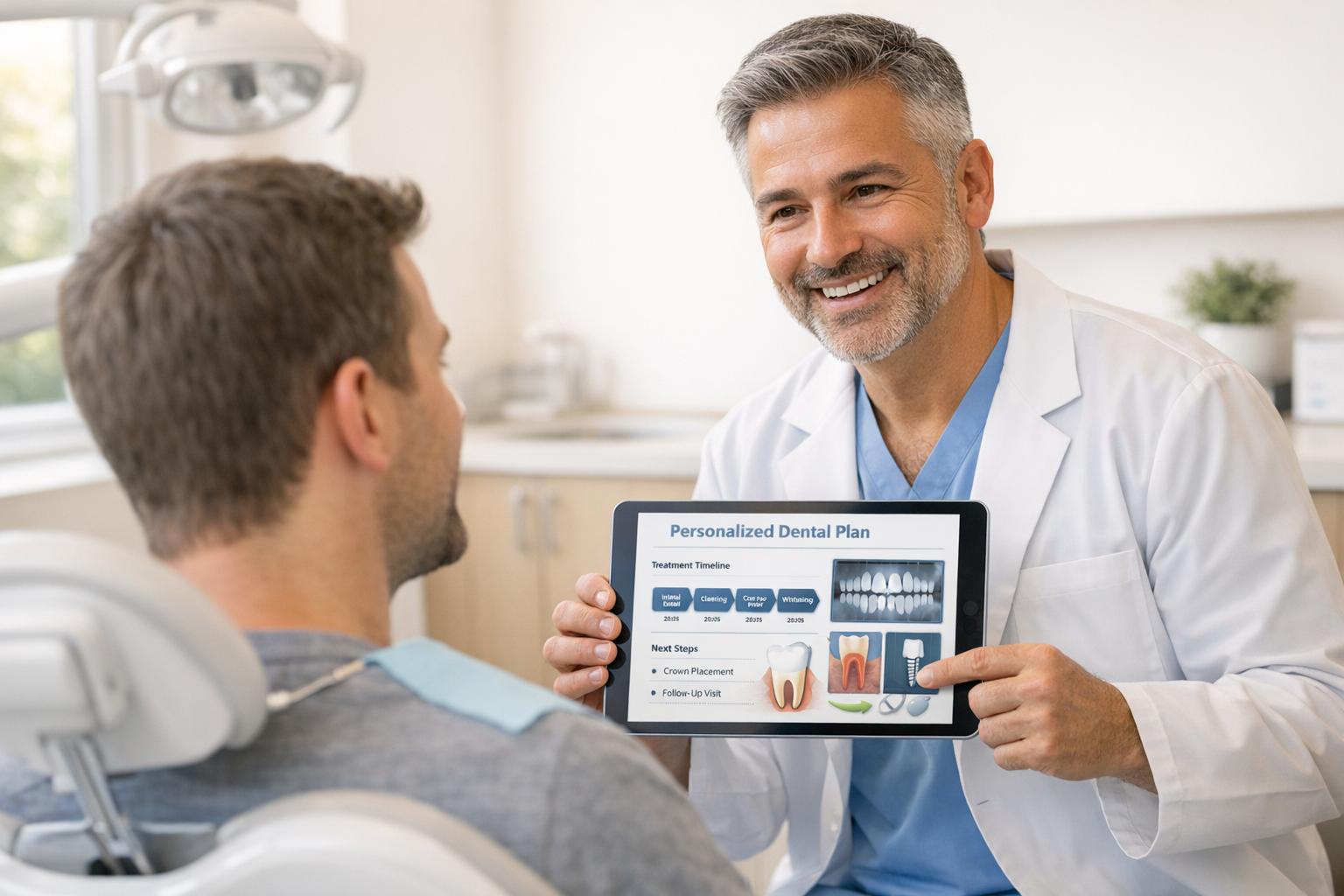
A personalized dental plan is a step-by-step roadmap tailored to your oral health needs, medical history, lifestyle, and financial preferences. It ensures treatments are safe, effective, and aligned with your goals, whether it’s pain relief, a brighter smile, or long-term dental health. Here’s what it involves:
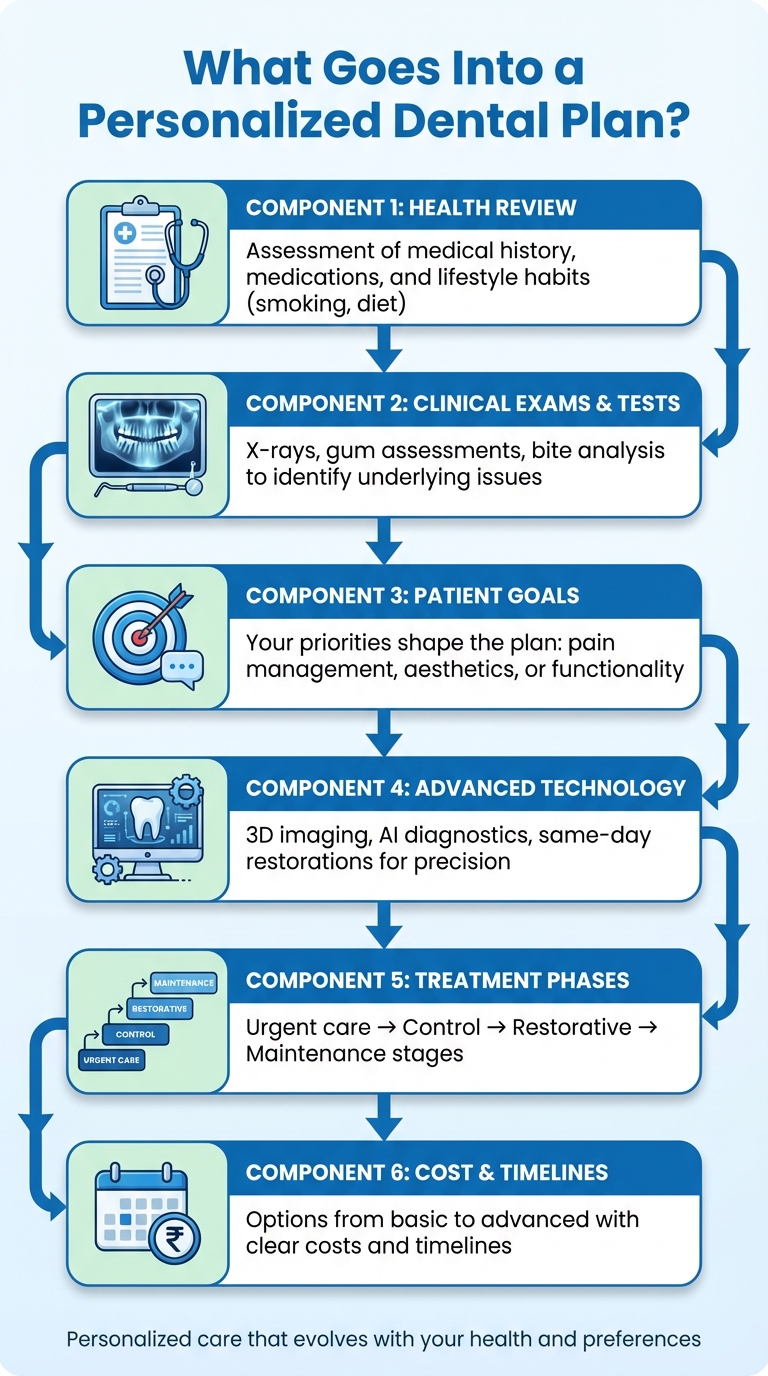
- Health Review: Dentists assess medical history, medications, and lifestyle habits like smoking or diet.
- Clinical Exams & Tests: Tools like X-rays, gum assessments, and bite analysis identify underlying issues.
- Patient Goals: Your priorities – pain management, aesthetics, or functionality – shape the plan.
- Advanced Technology: Tools like 3D imaging, AI diagnostics, and same-day restorations improve precision.
- Treatment Phases: Plans are broken into urgent care, control, restorative, and maintenance stages.
- Cost & Timelines: Options range from basic to advanced, with clear costs and timelines for each stage.
This approach ensures dental care evolves with your health and preferences, offering practical solutions for better oral health.
6 Key Components of a Personalized Dental Treatment Plan
Initial Patient Assessment
Medical and Dental History Review
Before starting any treatment, your dentist takes a deep dive into your overall health. This involves collecting details about chronic conditions like diabetes (which raises the risk of gum disease), heart disease, hypertension, autoimmune disorders, and osteoporosis. These conditions not only affect healing but also help the dentist determine the safest treatment approach for you.
A thorough review of your medications is equally important. For example, blood thinners can impact surgical safety, medications for osteoporosis can affect jawbone health, and certain drugs may lead to dry mouth, increasing the likelihood of cavities. Even over-the-counter supplements are considered, as having a complete list helps avoid harmful interactions with anaesthesia or prescribed pain relief medications.
"Safe, effective and personalized dental treatment begins with a comprehensive understanding of your patient’s medical and dental history." – California Dental Association
Your dentist will also look into your past dental treatments, lifestyle habits (like smoking, alcohol consumption, diet, or teeth grinding), and any history of dental anxiety to tailor the treatment to your needs. Regular dental patients are encouraged to update their health history forms every two years. Moreover, your records should be reviewed and updated at every appointment. It’s crucial to be honest about substance use, including opioids or alternatives like methadone. Concealing such information can lead to serious clinical risks or even a refusal of treatment.
This detailed health review lays the groundwork for an accurate and safe clinical evaluation.
Clinical Exams and Diagnostic Tests
After recording your medical and dental history, the next step is a detailed clinical examination. This begins with a visual inspection to identify issues like tooth decay, gum disease, fractures, or other abnormalities. Periodontal charting is conducted to measure gum pocket depths and assess the bone supporting your teeth. Additionally, soft tissue screenings focus on areas like your cheeks, tongue, palate, and throat to catch early signs of oral cancer.
Advanced diagnostic tools, such as digital X-rays and OPG (Orthopantomogram) scans, provide a clearer picture of hidden cavities, bone loss, and the structure of roots beneath the gums. For patients taking blood thinners, blood clotting tests are critical. An INR level between 2.0 and 4.0 is considered safer for minor procedures, while levels above 4.0 significantly increase the bleeding risk.
Lab tests like HbA1c can also be used to identify undiagnosed diabetes, which can affect the success of treatments like dental implants. A normal HbA1c level falls between 4% and 5.6%, while levels of 6.5% or higher indicate diabetes.
"Excellence in comprehensive dental care and treatment planning begins with a thorough assessment of the patient." – J Can Dent Assoc
Your dentist will also assess your bite and jaw alignment to detect any issues like teeth grinding or jaw problems. At The Dental Lounge, intraoral cameras are often used to give you a real-time view of your oral health. This helps you better understand your condition and why certain treatments are being recommended.
Each of these diagnostic steps plays a vital role in creating a treatment plan tailored specifically to your needs, ensuring both your safety and the effectiveness of the care you receive.
Patient Goals and Lifestyle Factors
Setting Patient Goals
Once your dentist has reviewed your medical and dental history, the next step is understanding your personal goals and daily habits. These details help create a treatment plan that’s tailored just for you. Your concerns – whether they’re about relieving pain, improving your smile, or restoring comfort while eating – become the guiding focus of your care.
Before the examination, take a moment to share your specific goals and any dental issues you’ve been facing. For example, if you’ve been dealing with severe tooth pain, that will naturally take top priority in your treatment plan. Once immediate problems are addressed, your dentist can help you explore options for achieving longer-term goals, like teeth whitening, orthodontics, or a smile makeover.
A "problem list" is created to summarise your concerns, prioritising your chief complaint – the main issue that brought you in. Plans are then broken into phases: starting with urgent care for pain or infection, followed by control, re-evaluation, definitive treatment, and finally, maintenance. For instance, if you’re in pain, the urgent phase will address that first. Later stages might focus on cosmetic improvements or preventive care. Your dentist will also present different treatment options – like in-office versus take-home whitening – so you can choose based on your preferences for time, cost, and effectiveness.
"Treatment therefore should be highly individualised for the patient as well as the disease." – Andamuthu Sivakumar, Department of Conservative Dentistry and Endodontics
Lifestyle and Oral Habits
Your daily habits play a major role in how effective your treatment will be. Factors like your diet, smoking, oral hygiene routine, and stress levels can directly impact your risk for cavities and the durability of any dental work. For instance, if you regularly consume sugary or acidic foods, your dentist may suggest fluoride treatments or more frequent cleanings to protect your teeth.
Smoking or using tobacco increases the likelihood of gum disease and even oral cancer. In such cases, your dentist might recommend periodontal therapy or regular oral cancer screenings. Stress-related habits like teeth grinding could mean you need a nightguard to prevent further damage. And if your oral hygiene is inconsistent, your dentist may suggest more frequent check-ups – high-risk patients might need visits every 3–4 months, while those with stable oral health may only need to come in every 9–12 months.
At The Dental Lounge, the Re-evaluation phase is crucial. During this stage, your dentist assesses how well you’re maintaining oral hygiene at home before moving on to long-term treatments like dental implants or veneers. This ensures that these advanced procedures are performed in the best possible conditions for success. Your lifestyle and budget are also taken into account, with phased treatment plans available to accommodate financial or time constraints.
"A good care plan not only addresses clinical needs but also takes into account their preferences, lifestyle, and budget." – Josh Gosnell, Vice President of Revenue, Adit
These insights help your dentist incorporate advanced technology into your treatment plan, ensuring the best outcomes tailored to your unique situation.
Technology in Treatment Planning
3D Imaging and CAD/CAM Technology
Advancements in dental technology are reshaping how treatment plans are created. 3D imaging, particularly Cone Beam Computed Tomography (CBCT), provides detailed cross-sectional views of your teeth, gums, and soft tissues. This technology reveals issues like decay, fractures, and root structures that traditional 2D X-rays might overlook. The process is quick – taking just 10–15 minutes – and involves less radiation compared to conventional CT scans.
CBCT plays a crucial role in ensuring precision during procedures. It measures jawbone density and identifies the exact location of sinuses, making it indispensable for tasks like implant placements and wisdom tooth extractions. The growing reliance on such tools is evident, with the global dental software market expected to approach $5 billion by 2030.
"3D imaging is revolutionising dental practices, providing practitioners with a more accurate way to diagnose and treat their patients. It significantly reduces the risks associated with dental procedures." – Dr. Greg Grillo DDS
When paired with CAD/CAM (Computer-Aided Design and Manufacturing) systems, the benefits of 3D imaging expand even further. These systems allow dentists to create same-day restorations, eliminating the need for external labs. Instead of waiting weeks for a crown or veneer, these can now be designed, manufactured, and fitted in a single visit. At The Dental Lounge, for example, patients can arrive with a damaged tooth and leave the same day with a permanent restoration.
Virtual simulations also come into play, offering a preview of the expected results. This provides clarity and confidence when making treatment decisions.
Intraoral Scanners and AI Diagnostics
Building on the precision of 3D imaging, digital tools like intraoral scanners further enhance diagnosis and treatment planning. These scanners replace the discomfort of traditional impression trays with high-resolution 3D imaging. By capturing thousands of frames per second, they create a detailed virtual model of your mouth in just about 40 seconds. This method is not only faster but also far more comfortable.
Once these digital scans are complete, AI algorithms take centre stage. They analyse X-rays and scans to detect early signs of cavities, bone loss, and gum disease – issues that might otherwise go unnoticed by the human eye. Interestingly, 64% of patients say they trust diagnoses made by AI, and 60% feel comfortable with AI analysing their medical images. In clinical studies, AI-assisted near-infrared imaging has proven as effective as traditional methods like bitewing radiography in spotting cavities.
"AI is being embraced as a collaborative tool that empowers dentists and their staff in diagnosis and treatment planning with efficiency, productivity, and confidence." – DEXIS
Creating the Treatment Plan
Treatment Sequencing
Once a diagnosis is made, your dentist will prioritise treatments based on urgency. Immediate concerns like pain, swelling, bleeding, or infection are addressed first, ensuring you’re comfortable before moving on to routine or cosmetic procedures. After resolving these urgent issues, the focus shifts to the Control Phase, where active dental problems are tackled. This phase may include cavity removal, periodontal cleaning, or root canal treatments. For instance, all cavities must be treated before starting orthodontic procedures like banding.
"A treatment plan is not a static list of services. Rather, it is a multiphase and dynamic series of events."
– Andamuthu Sivakumar, Department of Conservative Dentistry and Endodontics
Following the Control Phase, a Re-evaluation Phase allows tissues to heal. For example, after crown-lengthening surgery, a healing period of at least six weeks is standard. Once the gums and tissues stabilise, the Definitive Phase begins, focusing on restorative and aesthetic treatments such as crowns, bridges, implants, veneers, or orthodontics. Finally, the Maintenance Phase involves regular check-ups every 3 to 12 months to monitor oral health and prevent future problems.
To streamline the process, dentists often group procedures by quadrant, reducing the need for multiple anaesthetic applications. A professional cleaning is typically performed early on to provide a clear view of your teeth and gums, aiding in precise planning. This organised sequencing also helps estimate costs and timelines more accurately.
Cost Breakdown and Timelines
The cost of dental treatments varies based on factors like the dentist’s expertise, clinic location, and materials used. Advanced tools such as 3D imaging or CAD/CAM systems might increase upfront costs but often lead to better results and smoother recoveries.
Dentists typically offer three treatment plans to suit different budgets:
- "Ideal" plan: Focuses on the best outcomes, regardless of cost. For example, dental implants can cost between ₹20,000 and ₹80,000 per tooth, while clear aligners may range from ₹20,000 to ₹1,50,000.
- "Best" plan: Designed for patients with insurance, covering part of the expenses for advanced treatments.
- "Cost-Conscious" plan: Prioritises basic functionality, such as opting for partial dentures instead of fixed bridges.
Here’s a breakdown of estimated costs for common treatments:
| Treatment Type | Estimated Cost Range (INR) |
|---|---|
| Routine Check-up & Cleaning | ₹500 – ₹2,000 |
| Dental Fillings | ₹500 – ₹5,000 |
| Root Canal Treatment (RCT) | ₹2,000 – ₹10,000 |
| Dental Implants (per tooth) | ₹20,000 – ₹80,000 |
| Dental Crowns | ₹3,000 – ₹20,000+ |
| Orthodontics (Braces/Aligners) | ₹20,000 – ₹1,50,000 |
| Teeth Whitening | ₹5,000 – ₹15,000 |
Timelines for treatment depend on the number of appointments, natural healing durations (especially for implants), and post-operative care. For example, a detailed initial assessment to create a personalised treatment plan typically takes about 1.5 hours. Always request a signed treatment plan to clearly understand the sequence, costs, and expected timelines.
sbb-itb-25377e1
Personalized Care at The Dental Lounge
Range of Services and Expert Care
The Dental Lounge in Bangalore takes dental care to a whole new level by blending advanced diagnostic tools, modern treatment planning, and a patient-focused approach. Whether you’re coming in for a routine check-up or a complex restorative procedure, every service is designed to fit your specific needs and budget.
What’s unique here is how they consider your entire profile – medical history, lifestyle habits, and even your aesthetic preferences – when making treatment decisions. For instance, when planning procedures like teeth whitening or gum treatments, your daily habits play a key role in shaping the approach. They also cater to younger patients with specialised pediatric dentistry, creating a child-friendly environment that makes visits less intimidating for kids.
This patient-first philosophy is further supported by cutting-edge digital technology, ensuring seamless and efficient care.
In-House Technology and Manufacturing
One of the standout features at The Dental Lounge is their use of CAD/CAM technology, which allows for same-day restorations. Instead of the usual weeks-long wait for crowns or bridges from external labs, you can often walk out with your final restoration in just one visit.
Their on-site OPG scan facility offers detailed imaging, which directly informs precise treatment planning. Plus, modern intraoral scanners replace the discomfort of traditional impression trays with a far more comfortable digital process. These tools also enable virtual simulations of your expected results – especially handy for treatments like orthodontics or smile design. Being able to see a preview of your smile before treatment not only builds confidence but also addresses one of the biggest reasons patients hesitate: poor planning. Research even highlights this as a common factor behind abandoned dental treatments.
Treatment Planning with Templates for Dental Practices
Conclusion
A personalised dental plan acts as a roadmap designed specifically for your dental needs, medical history, lifestyle, and financial considerations. As the General Dental Council states, "Putting patients’ interests first should always be at the forefront of a dental practitioner’s mind". This patient-first approach shifts dentistry from a generic model to one that truly centres on your individual preferences and goals. It’s a way to not only address immediate concerns but also build a foundation for lasting oral health.
This shift from treating cases to treating individuals means that success is no longer just about clinical outcomes – it’s about how comfortable and functional your daily life feels. Whether you’re managing a condition like diabetes, working with financial constraints, or simply striving to maintain your natural smile, a customised plan adapts to these unique factors. Studies show that involving patients in the decision-making process improves both treatment acceptance and long-term adherence.
Advancements like 3D imaging and same-day restorations have made personalised care more precise and accessible than ever. However, the real difference comes when your dentist takes the time to understand your concerns, explains diagnoses in simple terms, and structures treatments to fit your budget. Research highlights that effective planning directly enhances treatment compliance. By combining these elements, your dental plan can adapt as your oral health needs evolve.
Regular check-ups play a critical role in keeping your plan up to date. Adjustments can be made to accommodate changes in your health, lifestyle, or even new advancements in dental care. Open communication about concerns such as teeth grinding or shifts in medication ensures that your treatment remains both safe and effective.
At The Dental Lounge, this comprehensive approach blends expert care with modern technology to create treatment plans that work seamlessly for you – tailored to your schedule, budget, and overall comfort.
FAQs
How does my medical history influence my dental treatment plan?
Your medical history plays a crucial role in shaping your dental treatment plan at The Dental Lounge. Health conditions like diabetes, heart disease, or autoimmune disorders can influence your gum health, healing process, and even the safety of certain dental procedures. Medications such as blood thinners or antihistamines are also taken into account, as they can affect bleeding, increase cavity risk, or influence the choice of anaesthetic.
With these factors in mind, your dentist may suggest adjustments like more frequent cleanings, fluoride treatments, or even alternative options like laser therapy to reduce potential risks. In some situations, they might collaborate with your physician or request clearance for specific treatments to ensure your overall health remains the top priority.
The Dental Lounge uses advanced tools like 3D imaging and digital health records to design a treatment plan that aligns with your medical needs. This plan includes a clear schedule, a cost estimate in ₹, and detailed aftercare guidelines, all aimed at providing safe, effective care for a healthier and more confident smile.
What technologies are used to create personalised dental treatment plans?
Modern dental care has embraced advanced digital tools to bring precision and comfort to patients. For instance, intra-oral scanners and 3D facial scanning systems now replace the messy, traditional impressions with highly accurate digital models of your teeth and bite. These models give dentists a comprehensive view of your oral anatomy, helping them plan treatments with incredible precision.
Moreover, artificial intelligence (AI)-powered software plays a pivotal role in modern dentistry. It can predict treatment outcomes, recommend the best solutions, and flag potential issues before they arise. Diagnostic tools like cone-beam CT imaging and digital radiographs provide detailed insights, while augmented reality (AR) technology visually showcases the anticipated results on your 3D model, making it easier for you to visualise and understand the proposed treatment.
Clinics such as The Dental Lounge in Bangalore have integrated these technologies into their workflow. This means faster planning, clear cost estimates, and a seamless process from diagnosis to treatment. By blending advanced tools with a personalised approach, they are redefining the dental experience for patients.
How are costs and timelines decided for a personalised dental treatment plan?
The cost of a personalised dental plan varies based on several factors, including the type and number of procedures needed – be it fillings, veneers, implants, or orthodontic aligners. Other aspects that influence pricing include the quality of materials used (like titanium or zirconia), advanced technology involved (such as 3D imaging or CAD/CAM systems), and the dentist’s level of expertise. Additionally, patient-specific details, like medical history, desired aesthetic outcomes, and the complexity of the case, also play a role. These factors are openly discussed with patients beforehand to ensure transparency.
The timeline for treatment depends on the complexity of the procedure and the technology employed. Advanced tools, such as intraoral scanners and in-house milling machines – like those utilised at The Dental Lounge – can significantly speed up the process. Many treatments that once took months can now be completed in weeks. For example, simpler restorations might only take a few days, whereas more involved procedures, like implants, may require multiple appointments over several weeks to allow for proper healing and adjustments.
Both the cost and timeline are carefully tailored to each patient’s needs, ensuring a treatment plan that’s both efficient and personalised.

